
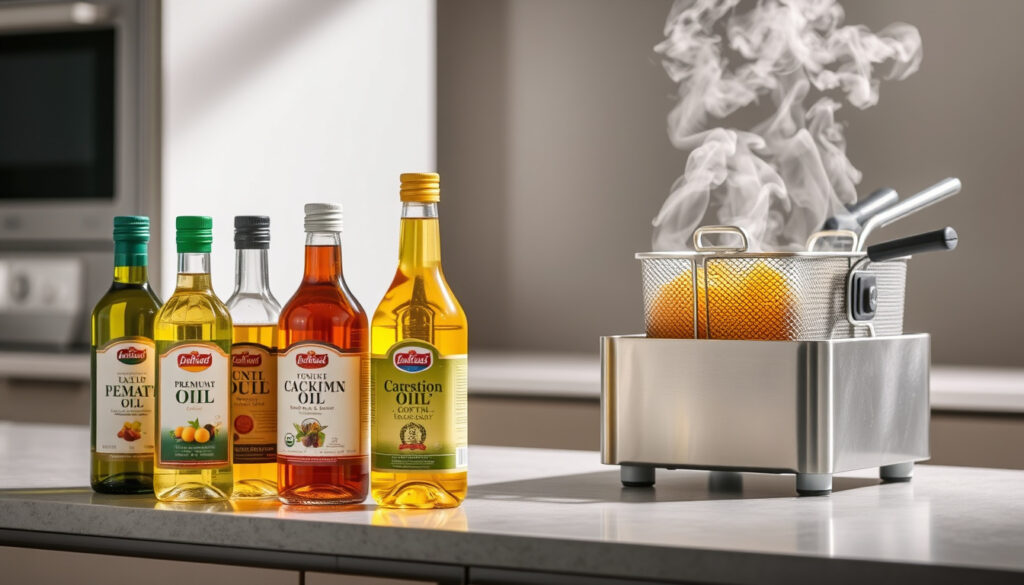
Deep frying transforms simple ingredients into crispy, golden creations, but the oil choice determines whether results satisfy or disappoint. The difference between a perfectly fried chicken wing and a greasy mess often comes down to smoke point, stability, and fat composition. Understanding which oils perform best under high heat conditions helps home cooks and professionals alike achieve consistent, delicious results without compromising food quality or health.
Smoke point serves as the primary factor separating suitable frying oils from those that break down prematurely. When oils reach their smoke point, they begin to decompose, releasing acrid smoke and forming harmful compounds that affect both flavor and nutrition. Beyond smoke point, considerations like fat type, flavor neutrality, cost, and allergen content all influence which oil works best for specific applications. This guide examines the science, health implications, and practical realities of deep frying oils to help readers make informed decisions for their kitchen needs.
What Is the Best Oil for Deep Frying?
Multiple factors converge to determine which oil excels for deep frying, and smoke point remains the starting point for evaluation. Deep frying requires temperatures typically between 350-375°F (177-190°C), meaning oils must withstand this heat without breaking down. Refined oils consistently outperform their unrefined counterparts because the refining process removes impurities and free fatty acids that lower smoke points. According to multiple culinary and food science sources, refined avocado oil leads with smoke points ranging from 480-520°F (249-271°C), followed closely by refined peanut oil at 450°F (232°C) and refined canola ranging from 400-475°F (204-246°C).
Deep frying demands oils with smoke points well above 375°F (190°C) to prevent breakdown, smoke production, and harmful compound formation during cooking. Always verify your oil’s smoke point on the label before frying.
Top Oils at a Glance
| Top Oil | Smoke Point | Pros | Cons |
|---|---|---|---|
| Avocado (Refined) | 480-520°F / 249-271°C | Highest smoke point, neutral flavor, nutrient retention | Highest cost per ounce |
| Peanut (Refined) | 450°F / 232°C | Excellent stability, good for reuse, widely available | Allergen risk for peanut-sensitive individuals |
| Canola (Refined) | 400-475°F / 204-246°C | Budget-friendly, mild flavor, high heat tolerance | Processed product, omega-6 content |
| Safflower (Refined) | 450-500°F / 232-260°C | Very high heat stability, neutral taste | Less common, moderate cost |
Key Insights for Deep Frying Success
- Refined oils consistently outperform unrefined versions for high-heat cooking due to higher smoke points and better stability
- Smoke points vary by brand, refinement level, and quality—always check labels for specific measurements
- Neutral-flavored oils like avocado, canola, and sunflower allow the food’s natural taste to shine without interference
- Oil stability during frying depends on fat composition; monounsaturated fats resist breakdown better than polyunsaturated fats
- Cost per use matters when frying frequently; canola offers the best value while avocado provides premium performance
- Reusability extends across 2-3 frying sessions at home when oil remains clear and odor-free
- Allergen labeling matters critically—peanut oil poses serious risks for those with peanut allergies even when refined
Smoke Point Comparison for Common Frying Oils
| Oil Type | Smoke Point (°F / °C) | Best for Deep Frying? | Notes |
|---|---|---|---|
| Avocado (refined) | 480-520 / 249-271 | Yes, highest overall | Neutral flavor, retains nutrients; top pick for high-heat applications |
| Peanut (refined) | 450 / 232 | Yes | Slight nuttiness, excellent for reuse in commercial and home frying |
| Canola (refined) | 400-475 / 204-246 | Yes | Mild taste, budget-friendly, high heat tolerance |
| Vegetable (blends, refined) | ~400 / 204 | Yes | Reliable neutral option, often soybean/corn blend |
| Sunflower (refined) | 410-450 / 210-232 | Yes | Neutral flavor, stable under high heat |
| Safflower (refined) | 450-500 / 232-260 | Yes | Very high heat adaptation |
| Soybean (refined) | 450 / 232 | Yes | Common in commercial frying oil blends |
| Olive (refined/light) | 390-470 / 199-243 | Moderate | Better than EVOO but not ideal for repeated deep frying |
Lower-smoke-point oils like unrefined peanut (320°F / 160°C), extra virgin olive oil (320-405°F / 160-207°C), and unrefined sesame (350°F / 177°C) prove unsuitable for deep frying and should be reserved for applications like sautéing or finishing where lower temperatures prevail.
Peanut Oil vs Canola Oil: Which Is Better for Deep Frying?
Peanut oil and canola oil represent two of the most popular choices for deep frying, each offering distinct advantages depending on priorities like flavor, budget, and health considerations. Peanut oil brings a subtle nutty character that many associate with classic fried foods like Southern-style chicken and donuts, while canola oil delivers essentially no flavor interference, making it versatile for both savory and sweet preparations. Both oils perform well under frying temperatures, though peanut oil edges ahead slightly with its 450°F (232°C) smoke point compared to canola’s 400-475°F (204-246°C) range.
Smoke Point and Stability
Both oils demonstrate excellent stability during repeated frying sessions, resisting breakdown and maintaining consistent performance across multiple uses. Peanut oil’s higher saturated fat content contributes to its oxidative stability, meaning it resists going rancid more slowly than oils higher in polyunsaturated fats. Canola oil, while lower in saturated fat, still holds up well for home frying when properly maintained and reused within recommended limits. For commercial operations conducting high-volume frying, peanut oil remains the traditional favorite due to its ability to withstand continuous use while maintaining clean flavor development.
Health Considerations
From a health perspective, neither oil ranks as definitively superior, though their fat compositions differ meaningfully. Canola oil contains higher levels of heart-healthy monounsaturated fats and omega-3 fatty acids while maintaining lower saturated fat content. Peanut oil provides vitamin E and remains stable during frying but contains higher levels of omega-6 polyunsaturated fatty acids, which some nutritional guidelines recommend limiting in excessive amounts. Both oils produce fewer harmful compounds than highly unstable polyunsaturated-rich oils when used properly for deep frying.
Canola oil typically costs $0.10-0.20 per ounce compared to peanut oil at $0.20-0.40 per ounce, making canola the more economical choice for regular frying at home. Bulk purchasing further reduces per-use costs for both oils.
Reusability and Storage
Both peanut and canola oils excel for reuse when handled correctly, though commercial kitchens often favor peanut oil for its superior performance across many frying cycles. At home, limit reuse to 2-3 times maximum, discarding when oil becomes dark, develops off odors, or produces excessive foaming during heating. Store both oils in airtight containers away from light and heat sources; refrigeration can extend shelf life but may cause temporary solidification that resolves upon warming. Filtering oil after each use removes food particles that accelerate degradation and extends usable life.
Is Vegetable Oil or Avocado Oil Good for Deep Frying?
Vegetable oil and avocado oil occupy opposite ends of the deep frying spectrum, with vegetable oil representing the budget-friendly workhorse and avocado oil serving as the premium performer gaining popularity among health-conscious cooks. Vegetable oil, typically a refined blend of soybean, corn, and other seed oils, offers reliable performance at accessible prices, making it a staple in commercial frying operations and budget-conscious home kitchens. Avocado oil, extracted from the fruit of the avocado plant rather than seeds, brings exceptional heat stability and nutritional benefits that justify its higher price point for serious frying enthusiasts.
Vegetable Oil Performance
Refined vegetable oil performs capably for deep frying with smoke points around 400°F (204°C), sufficient for achieving properly fried results with foods like french fries, chicken tenders, and onion rings. The neutral flavor means vegetables, proteins, and batters absorb no unwanted tastes, allowing seasoning and breading flavors to dominate. Vegetable oil’s primary drawbacks include its high polyunsaturated fat content, which makes it more susceptible to oxidation during frying, and its processed nature as a blended product of multiple commodity oils. For occasional home frying, vegetable oil provides acceptable results without straining budgets.
Avocado Oil Advantages
Avocado oil has emerged as a premium choice for high-heat cooking, boasting the highest smoke point among common kitchen oils at 480-520°F (249-271°C) when refined. This exceptional heat tolerance means avocado oil maintains its chemical structure and nutritional integrity even at deep frying temperatures, producing fewer degradation products than less stable alternatives. The oil contains high levels of monounsaturated fats and antioxidants including lutein, supporting both cardiovascular health and eye function. Avocado oil’s buttery, slightly nutty flavor remains subtle enough for most fried foods while adding a touch of richness that some cooks prefer.
Avocado oil costs approximately $0.50-1.00 per ounce, significantly higher than vegetable, canola, or peanut oils. While the premium performance and health benefits justify the cost for some applications, frequent deep frying can become expensive. Consider reserving avocado oil for foods where its subtle flavor enhances the final dish.
Comparing Vegetable and Avocado Oil
The choice between vegetable oil and avocado oil ultimately depends on priorities and budget constraints. Vegetable oil delivers adequate performance at the lowest cost, making it practical for high-volume or frequent frying where expense matters more than marginal quality differences. Avocado oil provides measurable advantages in smoke point, nutritional profile, and flavor subtlety for cooks willing to invest in premium ingredients. Some experienced fryers recommend starting with avocado or peanut oil for the best results, then transitioning to canola for cost savings once techniques and preferences clarify. Smoke point variations exist between brands and batches, so verifying labels remains important regardless of which oil you select.
What Is the Healthiest Oil for Deep Frying?
Determining the healthiest oil for deep frying requires balancing multiple factors including fat composition, smoke point stability, and the minimization of harmful compounds formed during high-heat cooking. No oil qualifies as strictly healthy given that deep frying adds significant calories and fat to food, but some options generate fewer negative compounds and provide better fat profiles than alternatives. Avocado oil consistently ranks as the healthiest choice based on its high monounsaturated fat content, antioxidant levels, and exceptional stability under frying temperatures without oxidizing.
Understanding Frying Health Risks
When oils break down during frying, they can form potentially harmful compounds including acrylamide, aldehydes, and polar compounds that accumulate with repeated use. Oils high in polyunsaturated fats prove most susceptible to this breakdown, generating more of these compounds during frying than oils dominated by monounsaturated or saturated fats. Choosing oils with high smoke points and stable fat compositions minimizes these degradation products, making refined avocado, peanut, and canola better choices than unrefined oils or those high in fragile polyunsaturated fats.
Health Rankings for Frying Oils
- Avocado oil ranks healthiest due to high monounsaturated fats, antioxidants, and low inflammatory omega-6 polyunsaturated fatty acid content while remaining stable during frying without oxidizing
- Peanut oil offers good stability and vitamin E content but carries higher omega-6 polyunsaturated fat levels that warrant moderate use
- Canola oil provides high omega-3 content and low saturated fat but undergoes significant processing and may form trans fats if overheated
- Vegetable blends typically contain high omega-6 polyunsaturated fats that prove less healthy for repeated use due to their instability
- Animal fats like tallow offer smoke points of 400-480°F (204-249°C) and excellent stability but add saturated fat to the final product
Avoiding low-stability oils helps minimize acrylamide and aldehyde formation in fried foods, though the frying process itself and consumption frequency remain the largest health determinants. Moderation, proper oil maintenance, and avoiding burned or over-darkened foods provide more health benefit than obsessing over optimal oil selection alone.
How to Choose the Best Oil for Deep Frying Chicken and More
Selecting the ideal oil for deep frying chicken or any other food involves weighing several practical factors beyond simple smoke point comparisons. Consider your budget constraints, cooking frequency, allergy concerns, flavor preferences, and whether you prioritize health optimization, cost efficiency, or authentic traditional flavors. These practical considerations matter as much as technical specifications when choosing oils for regular kitchen use.
Decision Factors for Oil Selection
| Factor | Best Choice | Consideration |
|---|---|---|
| Highest smoke point | Refined avocado oil | 480-520°F for maximum heat tolerance |
| Budget frying | Refined canola oil | ~$0.10-0.20/oz, widely available |
| Traditional flavor | Refined peanut oil | Classic nutty taste for fried chicken |
| Allergy concerns | Canola, avocado, or sunflower | Avoid peanut oil entirely |
| Reuse frequency | Peanut or canola | 2-3 uses at home, more with filtering |
| Nutritional profile | Avocado oil | Monounsaturated fats, antioxidants |
Practical Selection Guidelines
For chicken frying specifically, refined avocado or peanut oil provide the optimal balance of performance, flavor, and stability, with canola serving as the cost-conscious alternative. If frying foods that pair naturally with peanut flavor like traditional fried chicken, peanut oil enhances authenticity. For neutral applications where the food’s seasoning or batter dominates, avocado or canola provide cleaner backgrounds. Those with peanut allergies should avoid peanut oil entirely, recognizing that even refined versions may contain trace proteins capable of triggering reactions in sensitive individuals.
Proper oil maintenance extends usable life and improves results across all frying sessions. Filter oil after each use to remove food particles, store in cool dark locations, and test before reuse by checking for rancid odors, excessive darkening, or unusual foaming during heating. Discard oil that fails these checks regardless of how few times it has been used. For more guidance on preparing chicken specifically, see the How to Cook Chicken Breast – Juicy and Tender Every Time guide for foundation techniques.
Understanding Frying Oil Performance and Characteristics
The history of deep frying oils reflects changing agricultural patterns, economic forces, and evolving nutritional understanding over the past century. Early deep frying relied primarily on animal fats like lard and tallow, which provided excellent stability and smoke points around 400-480°F (204-249°C). The mid-twentieth century saw vegetable oils like soybean, corn, and cottonseed oils rise to prominence as processed alternatives became cheaper and more widely available through industrial agriculture and refined manufacturing.
Modern frying oil choices continue expanding beyond these traditional options, with avocado oil representing a newer category of premium culinary oils gaining kitchen acceptance. Consumer preferences increasingly favor oils offering specific benefits—whether maximum smoke point for high-heat applications, optimal fatty acid composition for health-conscious cooking, or traditional flavor profiles for authentic results. This diversification reflects broader trends in culinary knowledge and nutrition awareness among home cooks and professional chefs alike.
What Is Established vs Unclear About Frying Oils
Understanding what research definitively establishes versus what remains uncertain helps cooks make informed decisions without succumbing to marketing claims or outdated assumptions about oil performance.
| Established Information | Information That Remains Unclear |
|---|---|
| Refined avocado oil has the highest smoke point (480-520°F / 249-271°C) among common frying oils | Precise smoke point thresholds at which harmful compounds meaningfully form vary by oil composition and cooking conditions |
| Peanut oil and canola oil provide excellent stability for deep frying at their respective smoke points | Long-term health effects of consuming fried foods prepared with different oils remain difficult to isolate from overall dietary patterns |
| Refined oils outperform unrefined versions for high-heat cooking due to removed impurities and free fatty acids | Optimal reuse cycles vary significantly based on frying volume, food type, and filtration methods without clear consensus |
| Peanut oil poses serious allergen risks even when refined, requiring clear labeling and avoidance for sensitive individuals | Precise comparative health rankings change as new research emerges about specific fatty acid effects at frying temperatures |
| Smoke points vary by brand, refinement level, and quality—verification on labels remains essential | Whether small smoke point differences matter practically in home frying where temperature control varies |
| Deep frying requires oils with smoke points above 350-375°F (177-190°C) to avoid breakdown and harmful compounds | Exact cost-benefit calculations between premium and budget oils for specific household frying volumes |
Sources and Expert Guidelines for Frying Oil Selection
Multiple authoritative sources provide guidance on frying oil selection, though they approach the topic from different angles reflecting their organizational missions. Food science institutions and culinary organizations generally agree on the technical fundamentals of smoke points and stability while differing somewhat on health prioritization and practical recommendations based on their specific audiences.
Food safety guidelines emphasize maintaining proper frying temperatures, using oils with adequate smoke points, and avoiding prolonged heating that accelerates degradation. The FDA provides baseline information on oil composition and labeling requirements that inform consumer choices at the grocery store.
Based on FDA Food Guidelines
University extension services offer practical, research-based guidance on frying practices, including storage recommendations, reuse guidelines, and health considerations. Their recommendations typically balance scientific accuracy with accessible advice for home cooks rather than commercial operations.
Based on University of Minnesota Extension
For those seeking to expand their chicken cooking repertoire, the Chicken and Broccoli Recipes – Quick Keto Stir-Fry Guide offers additional preparation methods worth exploring. Combining sound frying technique with varied cooking approaches helps home cooks develop versatile skills for everyday meal preparation.
Summary and Recommendations
The best oil for deep frying depends on your specific priorities, but refined avocado oil leads on smoke point and health profile, peanut oil excels for traditional flavor and reuse, and canola oil delivers the best value for budget-conscious cooking. Understanding smoke points, fat composition, allergen considerations, and proper maintenance practices helps readers make choices that balance performance, health, and economy. No single oil serves all purposes perfectly, so many home cooks benefit from keeping two or three options available for different applications. Focus on oils with smoke points above 400°F (204°C), store them properly, and replace them at appropriate intervals to ensure consistent, delicious frying results.
Frequently Asked Questions
What is the smoke point of common frying oils?
Refined avocado oil leads at 480-520°F (249-271°C), followed by peanut oil at 450°F (232°C), canola at 400-475°F (204-246°C), and vegetable oil around 400°F (204°C). Smoke points vary by brand and refinement level.
What oil has the highest smoke point?
Refined avocado oil has the highest smoke point at 480-520°F (249-271°C), making it the most heat-stable option for deep frying among common kitchen oils.
Is canola oil good for deep frying?
Yes, refined canola oil performs well for deep frying with a smoke point of 400-475°F (204-246°C), mild flavor, and budget-friendly price. It offers good stability though processed more heavily than single-source oils.
Can I reuse deep frying oil?
Deep frying oil can be reused 2-3 times at home when properly maintained. Filter after each use, store in cool dark conditions, and discard if oil becomes dark, develops off odors, or produces excessive foaming.
Is avocado oil better than vegetable oil for frying?
Avocado oil outperforms vegetable oil with a higher smoke point (480-520°F vs ~400°F), better fat profile with more monounsaturated fats, and superior nutritional content including antioxidants. Vegetable oil costs significantly less though.
What is the healthiest oil for deep frying?
Avocado oil ranks as the healthiest option due to high monounsaturated fats, antioxidant content, and excellent stability during frying without oxidation. It minimizes harmful compound formation compared to less stable oils.
Should I avoid peanut oil if I have allergies?
Yes, peanut oil should be completely avoided by anyone with peanut allergies. Even refined peanut oil may contain trace proteins capable of triggering allergic reactions in sensitive individuals.
How do I store deep frying oil properly?
Store frying oil in airtight containers in cool, dark locations away from heat sources. Refrigeration extends shelf life but may cause temporary solidification. Filter after each use to remove food particles.
Related stories





Hannah Walsh covers municipal government, councils and local services across Kelowna and the Okanagan.