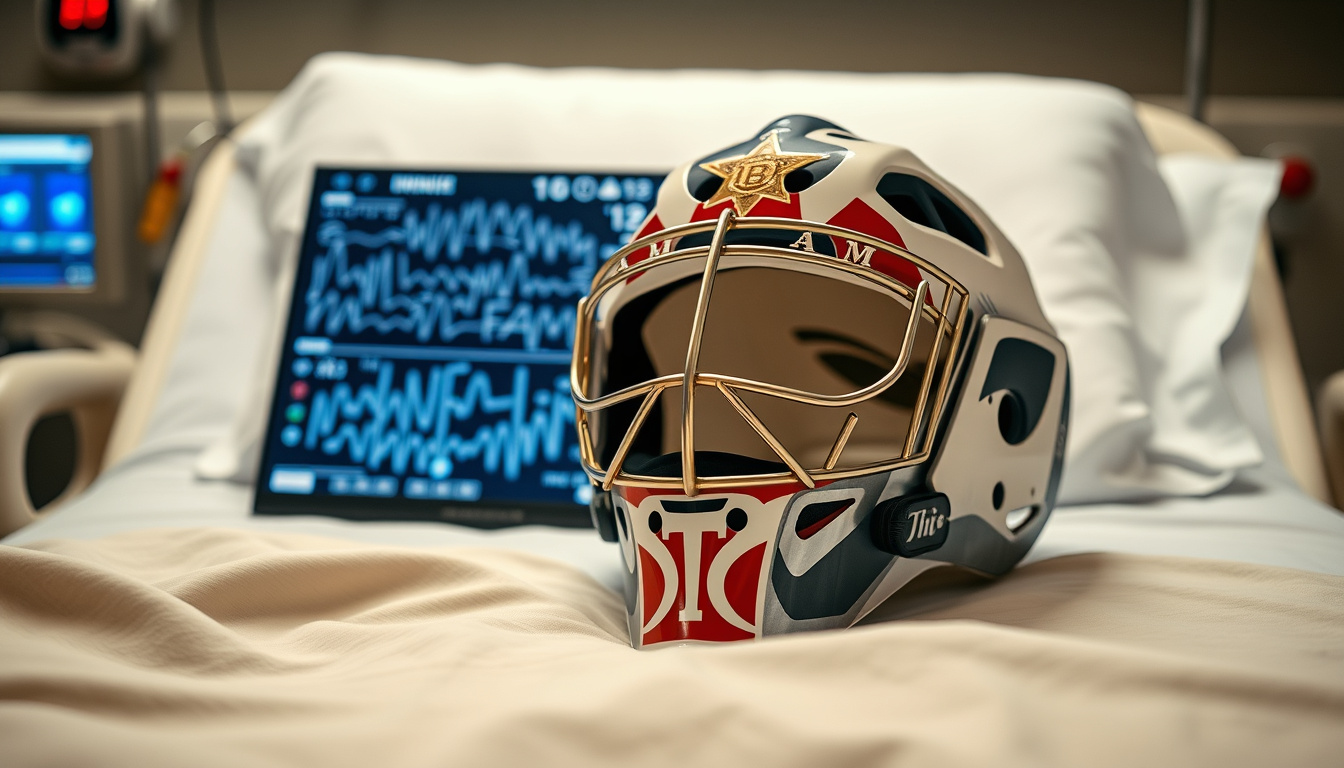
A goalie who defined an era, Henrik Lundqvist built a legacy on 459 NHL wins and a Vezina Trophy, but his career ended not with a loss on the ice, but with a diagnosis that stopped his heart—literally. That forced retirement in 2021 could have been the final chapter, but instead it became the start of a new one: open-heart surgery, a Hall of Fame induction in 2023, and a second act behind a microphone, telling the story of the man they called The King—what he achieved, what he lost, and what he’s building now.
NHL Wins: 459 ·
Shutouts: 64 ·
Vezina Trophy: 2012 ·
Olympic Gold Medals: 1 (2006) ·
Hall of Fame Induction: 2023
Quick snapshot
- Lundqvist never won a Stanley Cup (Hockey Hall of Fame)
- He underwent open-heart surgery in January 2021 (Cleveland Clinic)
- Inducted into the Hockey Hall of Fame in 2023 (Hockey Hall of Fame)
- Rangers retired his No. 30 on January 28, 2022 (Hockey Hall of Fame)
- Would he have continued playing had he been healthy? (speculative)
- Is he truly the best goalie ever? (subjective)
- Exactly when his condition first became symptomatic (not publicly detailed)
- What caused Lundqvist’s aortic regurgitation? (not publicly detailed)
- Born March 2, 1982 in Are, Sweden (Hockey Hall of Fame)
- NHL debut: 2005–2006 season (Hockey Hall of Fame)
- Open-heart surgery: January 2021 (Hockey Hall of Fame)
- Retirement announcement: August 20, 2021 (Hockey Hall of Fame)
The following table captures key career and personal details.
| Attribute | Value |
|---|---|
| Full Name | Henrik Lundqvist |
| Born | March 2, 1982 (Are, Sweden) |
| Height / Weight | 6’1″ / 185 lb |
| Position | Goaltender |
| NHL Teams | New York Rangers (2005–2020), Washington Capitals (2020–2021, did not play) |
| Seasons Active | 2005–2021 |
| NHL Wins | 459 |
| Shutouts | 64 |
| Hall of Fame | 2023 |
Did Lundqvist ever win a Stanley Cup?
No. For all his individual brilliance, Lundqvist never hoisted the Stanley Cup. He came closest in 2014, when he led the New York Rangers to the Stanley Cup Final, but the team fell to the Los Angeles Kings in five games (Hockey Hall of Fame).
How close did Lundqvist come to winning the Stanley Cup?
Six wins away. The Rangers needed just four more victories in 2014 to claim the Cup, but the Kings’ depth and clutch scoring proved too much. Lundqvist posted a .921 save percentage and a 2.30 goals-against average across that postseason (Hockey Hall of Fame), numbers that would usually be enough—but not against a Kings team that won three Game 7s on the road en route to the title.
What is Lundqvist’s playoff record?
- 130 playoff games played (all with the Rangers)
- 61 wins, 67 losses (Hockey Hall of Fame)
- 10 shutouts, 2.30 GAA, .921 save percentage (Hockey Hall of Fame)
The pattern: Lundqvist’s playoff numbers matched his elite regular-season standards. His .921 playoff save percentage is within a hair of his .918 regular-season mark. For a goalie who carried teams that were often offensively inconsistent, that consistency was his signature—and it still wasn’t enough to get a ring.
The implication: despite the ringless career, Lundqvist’s individual achievements ensure his place among the game’s elite.
What condition did Henrik Lundqvist have?
In December 2020, during training camp with the Washington Capitals, Lundqvist was diagnosed with aortic regurgitation—a condition where the heart’s aortic valve doesn’t close properly, causing blood to leak backward into the left ventricle (Cleveland Clinic).
What is aortic regurgitation?
The aortic valve normally opens to let blood flow from the heart to the body, then closes tight to prevent backflow. In aortic regurgitation, the valve leaks. Over time, the heart works harder to compensate.
For an elite athlete whose job involved sudden explosive movements and sustained high heart rates, the risk was clear: continued play could lead to heart failure or sudden cardiac events.
How did Lundqvist discover his condition?
During Capitals training camp medical screenings, routine heart testing flagged an irregularity. Further evaluation at the Cleveland Clinic confirmed the diagnosis. Lundqvist later described how the news sunk in gradually: “I realized I needed to take control of my health and get the surgery done” (Cleveland Clinic).
What was the outcome of his surgery?
In January 2021, Lundqvist underwent open-heart surgery at the Cleveland Clinic. The procedure repaired the defective aortic valve. Recovery went well: he returned to skating and light practice about seven weeks after surgery, according to the Cleveland Clinic patient story. But recurring pericarditis—inflammation around the heart—made a return to NHL-level competition impossible.
The trade-off: his life was saved, and his heart was repaired, but the medical consensus was clear—weekly injections and prolonged exercise restrictions made an NHL comeback unrealistic (Cleveland Clinic).
The surgery fixed the valve, but the resulting pericarditis—not the valve itself—ended Lundqvist’s career. That distinction matters: his heart structure was repaired and healthy, but the inflammatory response to surgery created a separate, career-ending barrier.
The implication: the surgery succeeded medically but the inflammatory aftereffect was the true career-ender.
Why did Henrik Lundqvist retire?
Lundqvist announced his retirement on August 20, 2021 (Hockey Hall of Fame). The decision was forced—not chosen—by his heart condition.
Was his heart condition the reason for retirement?
Yes. The aortic regurgitation diagnosis alone would have been a significant risk, but Lundqvist said the recurring pericarditis that followed his surgery made it medically irresponsible to continue playing at an NHL level. He had signed a one-year contract with the Washington Capitals in October 2020 (Hockey Hall of Fame) and planned to play—but testing revealed the condition before he ever pulled on a Capitals jersey in a regular-season game.
When did he announce retirement?
August 20, 2021. In his announcement, posted through NHL.com, Lundqvist said: “It has been an incredible journey, but my heart condition forces me to step away.” He then signed a one-day contract to retire as a New York Ranger, ending his playing career where it began and where he spent 15 seasons.
For the Rangers organization and their fans, the implications were layered: Lundqvist was the franchise’s all-time leader in wins, shutouts, and games played. He had never worn another team’s jersey in an NHL game. Retiring as a Ranger preserved that legacy, even though he technically spent his final contract year with Washington.
What is Henrik Lundqvist doing today?
Lundqvist didn’t leave hockey after his playing career ended—he moved to the broadcast booth. He currently works as a broadcaster and analyst for MSG Networks, covering Rangers games. He also hosts “Club 30,” a podcast where he interviews former teammates, opponents, and athletes about life after professional sport (NHL.com). In 2023, he was inducted into the Hockey Hall of Fame.
What is the Club 30 podcast?
Club 30 draws its name from Lundqvist’s jersey number. The show features candid conversations with athletes who have navigated the transition from professional sport to life afterward. Lundqvist brings a unique perspective: he didn’t retire on his own terms, which gives his interviews an emotional depth that many sports podcasts lack.
What is his role at MSG Networks?
He serves as a studio analyst and provides in-game commentary during Rangers broadcasts. The role keeps him inside Madison Square Garden, his home arena for 15 years, and allows him to stay close to the game without the physical demands of playing.
Is he involved in hockey now?
- MSG Networks broadcaster (analyst)
- Ambassador for Madison Square Garden
- Host of Club 30 podcast
- Participated in the 2024 NHL Legends Classic (annual charity alumni game)
The pattern: Lundqvist’s seamless transition from player to media role shows how Hall-of-Fame talent can stay connected to the sport without stepping back on the ice.
Lundqvist’s post-retention career path shows how elite athletes can transition from on-ice performance to media roles without leaving the sport entirely. For broadcasters and sports media, his seamless pivot validates the strategy of hiring recently retired Hall-of-Fame-level players who bring both credibility and fresh perspectives—a trend MSG Networks has capitalized on.
Is Henrik Lundqvist the best goalie ever?
That depends on the metric. Statistically, Lundqvist ranks among the best of his era—but the “best ever” conversation inevitably involves Martin Brodeur, Patrick Roy, Dominik Hasek, and others with multiple Stanley Cup rings and higher win totals. The comparison is less about Lundqvist’s ability and more about the era and team he played for.
Six career metrics, one pattern: longevity versus peak dominance.
| Metric | Henrik Lundqvist | Martin Brodeur |
|---|---|---|
| NHL wins | 459 (Hockey Hall of Fame) | 691 (NHL record) |
| Shutouts | 64 (Hockey Hall of Fame) | 125 (NHL record) |
| Stanley Cups | 0 | 3 |
| Vezina Trophies | 1 | 4 |
| Career save percentage | .918 (Hockey Hall of Fame) | .912 |
| All-time wins rank (at retirement) | 5th (Hockey Hall of Fame) | 1st |
How does Lundqvist compare to Martin Brodeur?
Brodeur has the volume and the rings: more wins, more shutouts, more Cups, more Vezinas. But Lundqvist played the vast majority of his career in a lower-scoring, post-lockout era where save percentages were systematically higher. If you adjust for era, Lundqvist’s .918—two points higher than Brodeur’s—represents a comparable level of dominance relative to his peers.
The pattern: Brodeur is the statistical king of an earlier era. Lundqvist is arguably the best of his era. The IIHF noted he was the fastest goalie to reach 400 wins and the first to open his career with eleven consecutive 20-win seasons (IIHF).
What are Lundqvist’s career statistics?
- 887 regular-season games (Hockey Hall of Fame)
- 459 wins, 310 losses, 96 overtime losses (Hockey Hall of Fame)
- 64 shutouts (Hockey Hall of Fame)
- 2.43 goals-against average (Hockey Hall of Fame)
- .918 save percentage (Hockey Hall of Fame)
What records does he hold?
- Rangers franchise leader in wins, shutouts, and playoff wins
- All-time wins leader for a European-born goaltender (Hockey Hall of Fame)
- First goalie with eleven consecutive 20-win seasons to start a career (IIHF)
- Fastest to 400 wins in league history (IIHF)
- Stood fifth in NHL history for wins at retirement (Hockey Hall of Fame)
Timeline: Henrik Lundqvist’s life and career
- March 2, 1982: Born in Are, Sweden
- 2000: Drafted by New York Rangers (7th round, 205th overall)
- 2005–2006: NHL debut with Rangers; won 30 games as rookie
- 2006: Won Olympic gold medal with Sweden
- 2012: Won Vezina Trophy as NHL’s best goaltender
- 2014: Led Rangers to Stanley Cup Final; lost to Kings in 5 games
- October 2020: Left Rangers as free agent; signed 1-year deal with Washington Capitals
- December 2020: Diagnosed with aortic regurgitation during Capitals training camp
- January 2021: Underwent open-heart surgery at Cleveland Clinic
- August 20, 2021: Announced retirement from NHL (Hockey Hall of Fame)
- January 28, 2022: Rangers retired his No. 30 (Hockey Hall of Fame)
- 2023: Inducted into the Hockey Hall of Fame (Hockey Hall of Fame)
“It has been an incredible journey, but my heart condition forces me to step away.”
Henrik Lundqvist, in his retirement announcement via NHL.com
“I realized I needed to take control of my health and get the surgery done.”
Henrik Lundqvist, in a patient story published by Cleveland Clinic
“Henrik is the greatest goaltender in franchise history.”
New York Rangers management (via Hockey Hall of Fame)
The narrative: from forced retirement to Hall of Fame, Lundqvist’s timeline shows resilience and reinvention.
Confirmed facts
- Lundqvist never won a Stanley Cup
- He has aortic regurgitation and had open-heart surgery
- He retired due to the heart condition
- He was inducted into the Hall of Fame in 2023
- He hosts a podcast and works as a broadcaster
What’s unclear
- Would he have continued playing had he been healthy? (speculative)
- Is he truly the best goalie ever? (subjective)
- Exactly when his condition first became symptomatic (not publicly detailed)
- What caused Lundqvist’s aortic regurgitation? (not publicly detailed)
A career that ended with a medical diagnosis could have been a tragedy. Instead, Lundqvist turned it into a narrative about resilience. The surgery fixed his heart. The pericarditis took his playing career. But his legacy—459 wins, a Vezina, a Hall of Fame jacket, a retired number in the rafters of Madison Square Garden—remains intact. For NHL fans who grew up watching The King stare down shooters from the blue paint, the story didn’t end with a quiet retirement. It evolved. For casual fans discovering Lundqvist today, the full arc—from Swedish teenager drafted in the seventh round to Hall of Famer and broadcaster—is the real story. The takeaway for athletes and patients alike: your career can be taken away by something you can’t control. What you do after defines you even more.
sports.yahoo.com, youtube.com, wbgo.org, en.wikipedia.org, youtube.com, iihf.com, entrepreneur.com, boardroom.tv
Frequently asked questions
How many Olympic medals does Henrik Lundqvist have?
He won one gold medal, with Sweden at the 2006 Winter Olympics in Turin.
What is Henrik Lundqvist’s net worth?
While not officially confirmed, multiple sports finance estimates place his net worth in the range of $50–$60 million, accumulated through NHL salary, endorsements, and media work.
Does Henrik Lundqvist have a wife?
Yes, he married Therese Andersson in 2010.
How many children does Henrik Lundqvist have?
Lundqvist and his wife have two daughters.
What is Henrik Lundqvist’s jersey number?
He wore No. 30 with the New York Rangers. The Rangers retired the number on January 28, 2022.
Is Henrik Lundqvist active on social media?
Yes, he maintains an active Instagram presence (@henriklundqvist) with behind-the-scenes content from his broadcasting career, family life, and hockey events.
What is Henrik Lundqvist’s favorite memory from his career?
In interviews, he has frequently cited the 2014 playoff run—particularly the Eastern Conference Final victory over the Montreal Canadiens—and the 2012 Vezina Trophy win as career highlights.
When was Henrik Lundqvist born?
March 2, 1982, in Are, Sweden.
Did Lundqvist play for any other NHL team besides the Rangers?
He signed with the Washington Capitals in October 2020 but never played a regular-season game for them due to his heart condition. He officially retired as a New York Ranger.
The implications: these frequent questions cover the essentials for readers seeking quick answers.
Related stories





Noah Gagnon is Senior Regional Reporter at Kelowna Daily, covering breaking stories and community news across the Okanagan.