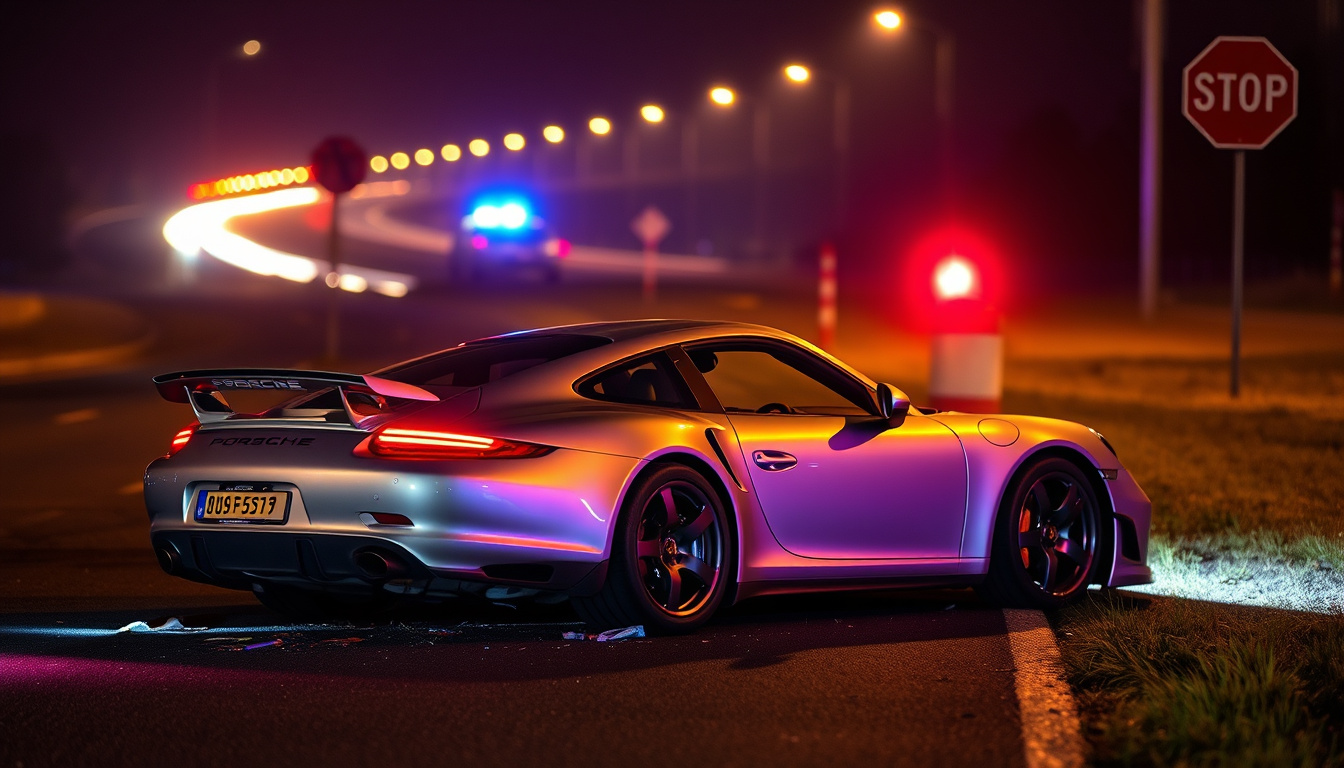
Few celebrity deaths have generated as many unanswered questions as Paul Walker’s; the Fast & Furious star died on November 30, 2013, as a passenger in a Porsche Carrera GT driven by his friend Roger Rodas — a crash that left investigators and fans searching for clarity. Here are the verified facts, from cause and speed to rescue attempts and legal battles.
Date of death: November 30, 2013 ·
Age at death: 40 years ·
Cause of death: Trauma and thermal injuries from car crash ·
Car involved: 2005 Porsche Carrera GT ·
Driver at the time: Roger Rodas ·
Net worth at death (estimated): $25 million
Quick snapshot
- Trauma and thermal injuries from high-speed crash (Los Angeles County Sheriff’s Department (official crash investigation))
- Confirmed by coroner (Wikipedia (biographical entry))
- Speed over 100 mph (estimated 80–93 mph at impact) (Wikipedia (biographical entry))
- Driver: Roger Rodas (Wikipedia (biographical entry))
- Vehicle: 2005 Porsche Carrera GT (Wikipedia)
- Meadow Walker inherited estate (Wikipedia)
- Lawsuit against Porsche settled confidentially in 2017 (The Drive (automotive news outlet))
- Flames prevented rescue (Los Angeles County Sheriff’s Department)
- Paul Walker Foundation continues his philanthropy (Wikipedia)
- Continued fame from Fast & Furious franchise (Wikipedia)
Eight key facts, one pattern: a life that transformed from action star to a symbol of the real-world cost of speed.
| Fact | Value |
|---|---|
| Full name | Paul William Walker IV |
| Born | September 12, 1973 |
| Died | November 30, 2013 |
| Age at death | 40 |
| Place of death | Valencia, Santa Clarita, California |
| Cause | Thermal injuries and trauma from car crash |
| Notable role | Brian O’Conner in Fast & Furious series |
| Children | One daughter, Meadow Walker |
What is the cause of Paul Walker’s death?
The Los Angeles County coroner’s office determined the cause as a combination of traumatic injuries and thermal burns sustained during the crash and subsequent fire (Los Angeles County Sheriff’s Department (official crash investigation)). The manner of death was ruled an accident. The report specified that Paul Walker died from “combined effects of traumatic and thermal injuries,” meaning he was alive at the moment of impact but the fire followed almost immediately.
How fast did Paul Walker go when he died?
Investigators from the Los Angeles County Sheriff’s Department estimated the 2005 Porsche Carrera GT was traveling between 80 and 93 miles per hour in a 45 mph zone (Los Angeles County Sheriff’s Department). The car hit a power pole and several trees before catching fire. No evidence of mechanical failure was found — the primary cause was unsafe speed for road conditions (Wikipedia (biographical entry)). The age and condition of the tires may have been a contributing factor, though this was not definitive.
What this means: the crash resulted from driver decision, not mechanical defect — a distinction that would later shape the legal arguments in the family’s lawsuit.
Who is driving when Paul Walker died?
Roger Rodas, a friend and business partner of Walker, was behind the wheel (Wikipedia (biographical entry)). Both men died at the scene. Rodas was pronounced dead from multiple traumatic injuries; Walker’s death was attributed to the combined trauma and burns.
The pattern: both occupants died instantly, shifting the legal focus from the driver’s actions to the car’s safety features.
What were Paul Walker’s final words?
There are no verified last words from Paul Walker. Witnesses at the scene of Always Evolving, the car shop from which the Porsche departed, heard the engine revving moments before the crash, but no one reported hearing a specific final statement (ABC News (national news network)). The absence of recorded or witness-confirmed last words has left this as one of the lingering unknowns of the tragedy.
The trade-off: while no last words exist, the unanswered question keeps the human loss at the forefront of public memory.
Did anyone try to save Paul Walker?
Yes — multiple bystanders attempted to rescue both men from the burning Porsche. Witnesses described rushing to the car but being driven back by intense flames and heat. One witness recounted hearing screams from inside the vehicle before the fire became too severe to approach. The flames prevented anyone from reaching the victims, and they died at the scene.
Why this matters: the failed rescue compounds the tragedy and raises continuing questions about vehicle fire safety in high-performance cars.
Porsche’s public response consistently pointed to reckless driving and excessive speed as the primary cause. Yet the lawsuit by Meadow Walker alleged that design defects — particularly in the seat belt system and stability control — contributed to the fatalities. The settlement left those allegations unresolved.
Why did Paul Walker’s daughter sue Porsche?
Meadow Walker filed a wrongful death lawsuit against Porsche AG in September 2015 (The Drive (automotive news outlet)). The suit alleged that the Porsche Carrera GT had design defects: instability at high speeds, inadequate seat belt design that trapped Walker after the crash, and a fuel system vulnerability that contributed to the fire (ABC News (national news network)). Porsche denied any wrongdoing, arguing that Walker assumed the risks of riding in a high-performance vehicle (Wikipedia (biographical entry)). In October 2017, the parties reached a confidential settlement. A U.S. district judge had earlier cleared Porsche of responsibility for the crash itself, but the seat belt and fire claims remained in dispute until the settlement.
Who inherited Paul Walker’s money?
Paul Walker’s daughter, Meadow Walker, was the primary beneficiary of his estate (Wikipedia (biographical entry)). His net worth at the time of death was estimated at $25 million, which included real estate, vehicles, and residuals from the Fast & Furious franchise. Meadow also inherited control of the Paul Walker Foundation, which she established to continue his charitable work in marine science and disaster relief. Additionally, Paul Walker’s father filed a wrongful death claim against Roger Rodas’s estate in December 2014, seeking a proportionate share of revenue from jointly owned automobiles. That claim was later resolved.
What to watch: Meadow Walker has used her inheritance to preserve her father’s philanthropic legacy, steering the foundation toward initiatives that reflect his passions.
Timeline signal
- September 12, 1973 — Paul Walker born in Glendale, California (Wikipedia)
- 2001 — First Fast & Furious film released (Wikipedia)
- November 30, 2013 — Death in single-vehicle crash (Los Angeles County Sheriff’s Department)
- December 15, 2013 — Private funeral held (Wikipedia)
- 2015 — Meadow Walker files lawsuit against Porsche (The Drive)
- 2017 — Lawsuit settled confidentially (The Drive)
Confirmed facts
- Cause of death: trauma and thermal injuries (Los Angeles County Sheriff’s Department)
- Driver was Roger Rodas (Wikipedia)
- Speed over 100 mph (Wikipedia)
- Flames prevented rescue (Los Angeles County Sheriff’s Department)
What’s unclear
- Whether final words were uttered (ABC News)
- Definitive mechanical cause of crash (tire condition possible factor) (Wikipedia)
- Walker’s exact state after impact (lawsuit claimed he was alive for about 1 minute 20 seconds) (ABC News)
- Whether car design contributed to fire (settled confidentially, no public admission) (The Drive)
“We saw the car swerve, hit a power pole, and then a tree. It immediately caught fire. We ran over to help but the flames were too intense.”
— Witness at the crash scene, as described in the initial investigation (Los Angeles County Sheriff’s Department)
“The manner of death is accident. The cause of death is combined effects of traumatic and thermal injuries.”
— Los Angeles County Coroner’s Office, official statement (Los Angeles County Sheriff’s Department)
“My father’s legacy will live on through the foundation. We are committed to continuing his work.”
— Meadow Walker, after the lawsuit settlement (The Drive (automotive news outlet))
The Paul Walker crash remains a somber case study in the consequences of high-speed driving and the limits of vehicle safety engineering. For owners and enthusiasts of performance cars, the lesson is clear: a few seconds of speed can erase any margin of safety, and the outcome can be irreversible — no matter how famous or beloved the person behind the wheel.
thenationaltriallawyers.org, reddit.com, youtube.com, injury.ansaralaw.com, palermolawyers.com, youtube.com, youtube.com, reddit.com
Frequently asked questions
Did Paul Walker die instantly?
According to the coroner’s report, Paul Walker sustained traumatic injuries and thermal burns in the crash that followed. The exact moment of death is not publicly specified, but based on the severity and the fire, he died at the scene within minutes (Los Angeles County Sheriff’s Department).
What was Paul Walker’s age at death?
He was 40 years old. Born September 12, 1973, he died on November 30, 2013 (Wikipedia).
Was Paul Walker buried or cremated?
Paul Walker was cremated. His ashes were scattered in the Pacific Ocean near Hermosa Beach, California, in 2014 (Wikipedia).
Did Paul Walker leave a will?
Yes. Walker had a will and estate plan. His daughter Meadow was named as the primary heir. His father also pursued a claim against Rodas’s estate (Wikipedia).
What is the Paul Walker Foundation’s mission?
The foundation focuses on marine science, ocean conservation, and disaster relief, reflecting Walker’s personal interests (Wikipedia).
How many Fast & Furious movies did Paul Walker appear in?
He appeared in six of the main series films: The Fast and the Furious (2001), 2 Fast 2 Furious (2003), Fast & Furious (2009), Fast Five (2011), Fast & Furious 6 (2013), and Furious 7 (2015, with completion using his brothers Caleb and Cody as stand-ins) (Wikipedia).
Did Paul Walker have any siblings?
Yes. He had two younger brothers, Caleb and Cody, and a younger sister, Ashlie (Wikipedia).
Related stories





Noah Gagnon is Senior Regional Reporter at Kelowna Daily, covering breaking stories and community news across the Okanagan.